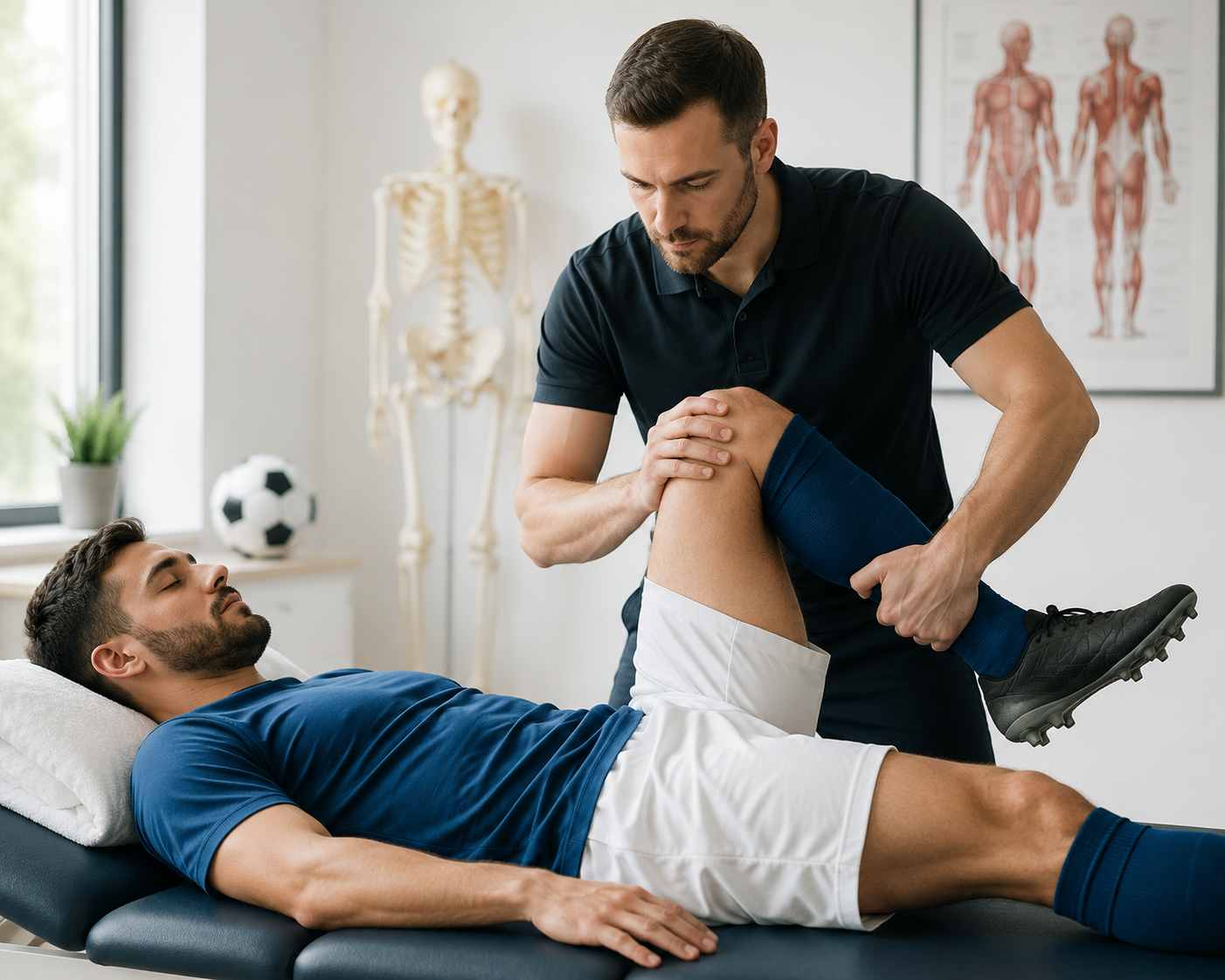
Athletes place constant demand on their bodies. Whether it’s sprinting, cutting, lifting, or repetitive impact, the musculoskeletal system is always adapting—and sometimes breaking down. Osteopathic treatment offers a hands-on approach that supports both injury recovery and ongoing performance maintenance throughout the season, helping athletes stay consistent, resilient, and competitive.
This applies across all levels—from weekend warriors to competitive club and school athletes in sports like soccer, hockey, basketball, football, and track.
Why Athletes Benefit from Osteopathic Care
Osteopathy is based on the idea that structure and function are deeply connected. For athletes, that matters because even small restrictions in joints, fascia, or soft tissue can influence:
- Movement efficiency
- Power output
- Recovery time
- Injury risk
- Compensation patterns
Instead of focusing only on the site of pain, osteopathic treatment assesses how the whole body is adapting to sport-specific stress.
Sports Injuries Osteopathic Treatment Can Help With
Athletes commonly seek osteopathic care for both acute and chronic issues, including:
- Muscle strains (hamstrings, groin, calves)
- Joint sprains (ankle, knee, wrist)
- Low back pain from loading and rotation
- Neck and shoulder tension
- Hip mobility restrictions
- Overuse injuries (tendinopathies, shin splints)
- Osgood-Schlatter
Rather than just treating symptoms, osteopathic manual therapy addresses underlying mechanical stress that contributes to reinjury.
In-Season Maintenance: The Overlooked Advantage
One of the biggest gaps in athletic care is maintenance during the season. Many athletes only seek treatment when something is already painful. However, regular osteopathic sessions can help prevent breakdown before it starts.
Key benefits of in-season treatment:
1. Faster recovery between games and practices
Manual treatment can help reduce tissue tension, improve circulation, and support nervous system recovery after high loads.
2. Reduced injury risk
By addressing tightness, asymmetries, and joint restrictions early, athletes reduce compensations that often lead to injury.
3. Improved mobility and movement quality
Better hip, spine, and ankle mobility directly translates to improved performance mechanics.
4. Consistency across the season
Instead of peaks and crashes in physical condition, athletes maintain a more stable baseline.
Why “Prehab” Matters More Than Rehab
Many athletes think about rehab after injury. A more modern approach is prehabilitation—treating the body before it fails.
Osteopathic treatment fits into this by:
- Identifying early movement restrictions
- Balancing loading patterns
- Supporting recovery after intense training blocks
- Keeping biomechanics efficient under fatigue
This is especially important during congested schedules like tournaments, playoffs, or multi-game weeks.
What a Typical Athletic Osteopathic Session Includes
While every treatment is individualized, sessions often involve:
- Full-body movement and postural assessment
- Joint mobilization techniques
- Soft tissue and fascial release
- Muscle energy techniques
- Breathing and rib cage mechanics work (important for endurance athletes)
- Recovery and training recommendations
The goal is not just pain relief—but restoring optimal movement patterns for sport performance.
When Athletes Should Book Treatment
A proactive approach works best. Athletes often benefit from treatment:
- Every 2–4 weeks during a competitive season
- After intense training blocks or tournaments
- Immediately following minor strains or tightness
- During preseason to prepare the body for load increases
- Post-injury return-to-play support
Even when no pain is present, subtle restrictions can still impact performance.
Osteopathy as Part of a Performance System
The most effective athletes don’t rely on one intervention. They combine:
- Strength and conditioning
- Mobility and flexibility work
- Sport-specific skill training
- Recovery strategies (sleep, nutrition, load management)
- Manual therapy such as osteopathy
Osteopathic care acts as the “reset button” that helps the body stay aligned and adaptable throughout the season.
Final Thoughts
Athletic performance is not just about training harder—it’s about recovering smarter and staying mechanically efficient under load.
Osteopathic treatment provides a structured, hands-on approach that supports:
- Injury recovery
- Movement optimization
- Injury prevention
- Long-term athletic durability
For athletes looking to stay consistent across a full season, regular osteopathic care can be the difference between frequent setbacks and sustained performance.
Book Today
To schedule your osteopathic assessment, visit our booking site or call 519-657-8364